
Income-tax Act
Tax on online winnings and tax on crypto are not the same thing
Two different sections of the Income-tax Act, 1961 set a rate of 30 per cent — one on net winnings from online games (section 115BBJ), one on the transfer of a virtual digital asset (section 115BBH). Neither replaces the other, and this page does nothing but read what the text of those sections says.

Why there is a tax page on this site
The pages that sit at the top of this search carry bonus figures, welcome packages and sometimes a licence name. In preparing this page we pulled the full text of the top three Indian results and searched them for the words that would have to be there: “TDS”, “income tax”, and the section numbers 115BBJ, 194BA, 115BBH and 194S. Not one of those terms appears even once, on any of the three.
That is a strange omission, because the tax question keeps turning up in what Indian readers actually search for, and it is not a matter of opinion. It is written down.
So this page does what the rest of this site does. It reads a document and says what is in it, where, and what it does not prove.
One thing has to be settled at the outset, because the whole page turns on it. A tax section is not a permission. The job of the Income-tax Act is to tax income; declaring an activity lawful or unlawful is not its job. So nothing below should be read as “this means it is allowed”. What applies to online money gaming in India is set out separately on the law page, and that question is not this page’s.
Two thirty percents, and they are not one thing
This is where the confusion starts. In Indian conversation about crypto, “thirty per cent” is a familiar number. In conversation about online gaming, “thirty per cent” is equally familiar. They are two different sections, they land on two different things, and no attempt was made to reconcile them with each other. Which section a figure belongs to is stated wherever a figure appears near the crypto casinos listed for India.
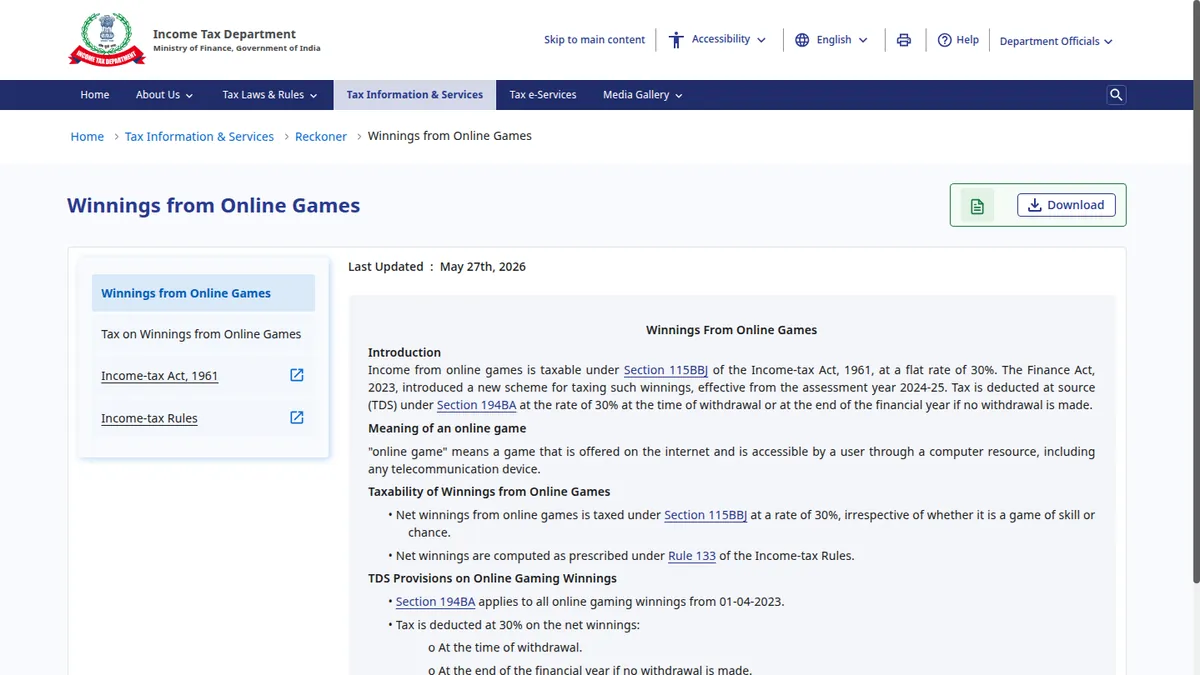
The first is section 115BBJ. It puts a flat 30 per cent on net winnings from online games. It took effect from 1 April 2023, so income of that kind after that date falls under it.
The second is section 115BBH. It puts 30 per cent on income from the transfer of a virtual digital asset. Bitcoin, ether and USDT all sit inside that definition.
The first lands on what came out of the game. The second lands on what came out of moving the coin. Both can happen to the same person, because money enters a crypto casino as coin and leaves as coin — and buying a coin and selling it are each, in themselves, transfers.
Sections 115BBJ and 194BA: the gaming side
Section 115BBJ sets the rate; section 194BA arranges deduction at source at that rate. They are read together.
Some things these sections say that get written down wrongly elsewhere:
The tax is on “net winnings”, not on every win. The method of calculation is in Rule 133 of the Income-tax Rules, inserted by notification 28/2023 dated 22 May 2023. In outline, net winnings are the amount withdrawn during the year less the deposits made and the opening balance of the account. The practical meaning is that withdrawing your own deposit is not, by itself, a winning.
There is no minimum threshold. Section 194BA sets none for winnings. That separates it from section 194B, which covers lottery, crossword and game-show winnings and does carry a threshold. Pages that say “nothing is taxed below ten thousand rupees” in an online-gaming context have taken 194B for 194BA.
Deduction happens at two moments. Under the scheme of the section it is made when money is withdrawn from the account, and again at the end of the financial year on whatever balance remains in it.
Rebates and deductions do not reach this income. The rebate under section 87A and the deductions under sections 80C to 80U do not apply to it. Cess, and surcharge where applicable, sit on top of the 30 per cent.
Filing a return is a separate obligation. A return has to be filed for the year in which such income arose, even where the rest of the income is below the basic exemption limit.
One thing has to be added here, and it follows from this site’s own rule. Section 194BA places the duty on the person making the payment. The ten names in this site’s table are all foreign. In their published documents — terms and conditions, privacy policy, responsible-gaming policy — we found no mention of Indian tax, of TDS, or of this section. That means one thing only: the sentence is not on their pages. It does not mean they deduct, and it does not mean they do not. What has not been read is not written up here as though it had been.
Sections 115BBH and 194S: the coin side
Now the other side, which the crypto-casino conversation almost always drops.
Section 115BBH puts 30 per cent on income from the transfer of a virtual digital asset, and attaches three conditions that set it apart from ordinary income.
First: no deduction is allowed except the cost of acquisition. Second: a loss on such a transfer cannot be set off against any other income — not salary, not house property, not any other capital gain. Third: that loss cannot be carried forward to later years either.
The third condition is worth a pause, because in a gambling context its effect is direct. An activity in which loss is as ordinary as gain, and a tax treatment in which loss counts for nothing: the sum of those two rests on the text of the section, not on anybody’s opinion.
Alongside it sits section 194S, which arranges a 1 per cent deduction at source on payment for the transfer of a virtual digital asset. That one per cent is on the gross value of the transaction, not on the profit part — so it applies to a transfer made at a loss as well. Two thresholds are given: ₹50,000 for payments by specified persons and ₹10,000 for others. Where no PAN is furnished the rate rises to 20 per cent. The return carries its own Schedule VDA for this.
Where the two sides meet
Put the two together, because the whole structure of a crypto casino stands exactly where they meet.
All ten operators in this site’s table settle in crypto. On none of their published pages did we find a withdrawal ceiling written in rupees: the four ceilings that were read with a clause number are in dollars, euro and USDT. That means the work of getting from rupees into coin and back out again stays with the player — and that work is itself a transfer. Neither UPI nor the rupee is named anywhere in the operators' own documents, and the one place the rupee does appear is a floor rather than a ceiling.
So along a single route two separate sections attach at two separate points: one where net winnings came out of the game, one where a coin changed hands. They are not netted against each other, and neither stands in for the other.
What the transfer itself costs is a third thing again, and it is not the operator's charge: the fee the chain takes is set by how busy the network is, not by the casino.
What is not on this page
This list matters as much as everything above it.
There is no figure here for what any particular situation would owe. That calculation depends on a person’s whole income, their residential status and the provisions in force that year, and it is not the work of a comparison page.
There is nothing here about how to avoid tax, how to show less of it, or by what route money might be brought in and in what form. Nothing on this site is written about avoiding compliance with a law — not about tax, not about anything else.
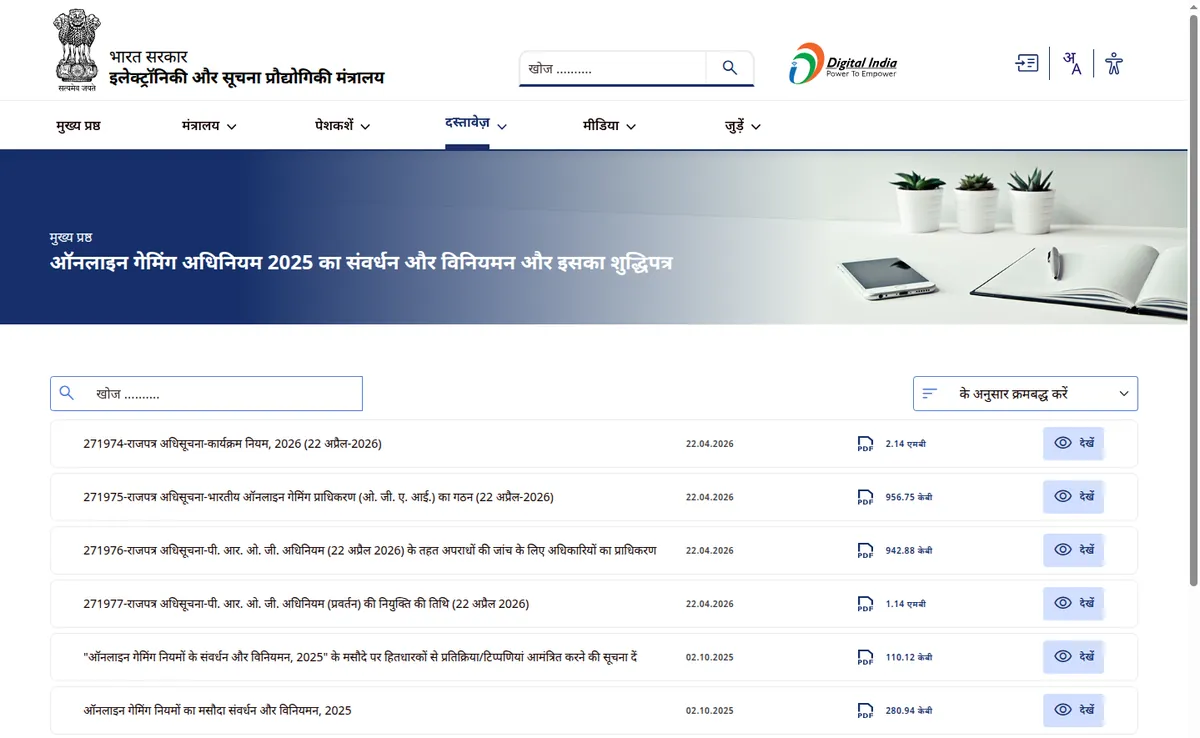
And there is nothing here suggesting that the existence of these sections permits anything. Section 115BBJ dates from 2023; the Online Gaming (Promotion and Regulation) Act, 2025 came two years later. They are separate laws answering separate questions, and the existence of one does not cancel the other. This page is not tax advice and is not a substitute for it.
The currency question underneath all of this, and what it costs on the way in and on the way out, is in where value is lost between rupees and crypto.